 Vythiri, Wayanad - As we took our seats in the little restaurant the waiter brought out two glasses of water; he held the glasses from the inside so that his fingers were completely immersed in the water that we were meant to drink. When I was a child we used to have two types of juice served at the school canteen. Everyone liked only one flavor and so whoever would get to it first would dip his finger into the juice glass and proclaim - "This one' s mine! I dipped my finger into it!" None of the children would drink the juice which was probed with someone else's finger...I guess that mightn't be the case here.The fingers in the glass of water are a common sight in local restaurants all over India. It's such a small thing, but it always reminds me that the world which I come from is so different to this country that keeps luring me in with something new every time. It also reminds me that from our "Western" point of view there are so many of these little things which India just "doesn't get" and this is somewhat puzzling because regarding some of the bigger issues India has so much to teach the countries that "get" the little things.
 The things that India doesn't "get" are numerous. They often surprise, even shock first time visitors, but usually they become somewhat funny, once they are long gone and exist only in the back of one's mind, as stories to tell friends.
Here are some of these little things: - An omelet-maker scratching his crotch then serving you the omelet with the same hand. - A cleaner in a fancy restaurant sweeping the rubbish near you while you eat, forcing you to lift your feet as he sweeps under your table. - Sitting on the train looking lost with an empty plastic water bottle and a local saying "Give it to me please", taking it and tossing it out the window. - A devotee at a temple reading religious texts into a microphone and occasionally coughing, snorting and spitting up phlegm while the sound is magnified to the full capacity of the speakers. - VERY loud wedding processions. Loud means the sound from the speakers on the street will make your hotel room on the third floor vibrate like the inside of a night-club on a Friday night, oh and all the fun happens regardless of what time it is, meaning that the vibrations will occasionally get you up in the middle of the night.
 These are light-hearted examples, but occasionally there are those things that make you cringe long after they happen. I still remember how shocked I was, when for the first time I saw a youngster at Haridwar (a holy Hindu town) push a huge pile of rubbish into the Ganges - the holiest river for Hindus around India. Later I learned that it's normal here. Every picnic spot, every waterfall, beach and lake is polluted with wrappers, plastic bottles and whatever else. It mightn't be as bad as the industrial waste of some "first world countries" but close to a billion people throwing crap wherever they please can't be good for the environment, and it's just damn unpleasant. Am I criticizing the same people of India which I love? In some way "Yes", but I'm not doing it to say that "We" are better. Far from it. It's not like Indian general public don't have any idea about personal hygiene. Normally people don't even eat breakfast before showering and brushing their teeth, while most dwellings, these even include some that I've visited in the slums are spotless clean. I figure that teaching children not to throw rubbish into a river should be a much easier task than the one the "West" should undertake - teaching children to care for each other the way so many people in India do. I like to be naive and imagine that one day we'll all "GET IT" and the world will be one big, happy place :). My cynical side though, tells me that the day is still not even within sight.
 Anyhow, I've been influenced by my experiences over the past few days. Perhaps all of the things that one becomes used to in "Indian India" became more apparent after our stay at Bylakuppe - "Tibetan India". Bylakuppe is not crowded, it's not loud and there are signs everywhere warning people not to litter. The signs are not always obeyed, but at least their presence means that there is some awareness. Our hotel room in Bylakuppe was spacious and quiet and had a view of a beautiful green garden from its window. This made our stay in the crammed room with "wall views" in Mysore that much more painful. But the most painful part came at night. Around 1am we were woken up by the sound of a TV at near full blast. Just as the noise died down and I began to doze off I was woken up again, this time by the sound of the "service buzzer" - an extremely annoying invention used to bring a hotel worker to your room. The problem with the service buzzer is that it makes a buzz so loud, the whole hotel hears it and hears it well. The room service however, only comes after the irritating sound is repeated several times. On this night the buzzer was pressed without any desire for room service - it was located near the bed and a hotel guest had simply pressed it in his sleep. The buzzing continued for about two minutes. Maybe I woke up the guilty party with my swearing in Russian (to make it less offensive :)) as I walked around the corridor trying to figure out where the buzz was coming from, in any case, thankfully the noise stopped.
 It's possible that this "wonderful" night contributed to us not wanting to stay in Mysore the next day, but more likely it was the fact that Mysore didn't offer us anything new. The fatigue of constantly moving around is catching up to us and we desperately wanted some peace and quiet, as well as something interesting to photograph :). Too much to ask for in India, sometimes, but after bouncing around a few towns in the breathtakingly beautiful Wayanad district we found what we wanted - a little YMCA hostel with a few private rooms, located amidst some spectacular tea plantations - my photographic subject for the next few days. Wayanad is not all perfect though, thanks to the hordes of mostly local tourists that do the things I previously mentioned make me cringe - eat, pollute and crap all over Wayanad's star attractions - the Pookote Lake, Soochipara Waterfalls and many more places. Thankfully we've had the peace and quiet we craved, I photographed what I wanted and now, rejuvenised, we're ready to continue our way to the most Southern point of India - Kanyakumari. Trissur, considered Kerala's cultural capital will be our next stop.
 Photos
I mostly photographed at one tea plantation, which was located not far from the place where I stayed. Coming back and photographing in the same place is beneficial because not only do you become familiar with the location, but the people you are photographing also become more familiar with you. The people at this particular plantation were absolutely wonderful. They were childlike in the way they became excited when they saw two foreigners enter their world, which I imagine for them is rather mundane. All eyes were on us. A smile would be met with a huge grin and shy laughter. In the distance we could hear the workers quietly telling each other what to say - '"What is your name?" "What is your native place?" and then someone would work up enough courage to ask the questions out loud. Our answers would be met with even more excited laughter and commotion. It seemed as if the workers were saying to each other "It worked! They understood us!". Taking a photograph of the women usually led to the women cracking up with shy laughter, while those that were outside of the photo would joke and say "Smile please!", until I would point the camera at them and they'd also crack up. Photographing at this tea plantation was one of those beautiful, simple, childlike experiences which makes me feel happy I'm doing this. Photography gave me a reason to be in what is simply a workplace for the people in my images and it brought a little laughter into their lives. If I could shoot in such stunning locations and have it this way all the time I wouldn't complain :).
Photos
I mostly photographed at one tea plantation, which was located not far from the place where I stayed. Coming back and photographing in the same place is beneficial because not only do you become familiar with the location, but the people you are photographing also become more familiar with you. The people at this particular plantation were absolutely wonderful. They were childlike in the way they became excited when they saw two foreigners enter their world, which I imagine for them is rather mundane. All eyes were on us. A smile would be met with a huge grin and shy laughter. In the distance we could hear the workers quietly telling each other what to say - '"What is your name?" "What is your native place?" and then someone would work up enough courage to ask the questions out loud. Our answers would be met with even more excited laughter and commotion. It seemed as if the workers were saying to each other "It worked! They understood us!". Taking a photograph of the women usually led to the women cracking up with shy laughter, while those that were outside of the photo would joke and say "Smile please!", until I would point the camera at them and they'd also crack up. Photographing at this tea plantation was one of those beautiful, simple, childlike experiences which makes me feel happy I'm doing this. Photography gave me a reason to be in what is simply a workplace for the people in my images and it brought a little laughter into their lives. If I could shoot in such stunning locations and have it this way all the time I wouldn't complain :).
 From top to bottom:
First: A worker carrying a bag of tea from the store-room onto a tractor, which takes the day's harvest to a factory for the tea to be processed. Those bags weigh about 50kg each.
Second: A crowd gathers outside the Mysore palace. During the festival of Dussehra and every Sunday from 7-8pm the whole palace lights up with ninety-six thousand lightbulbs. Just after the photo was taken I joined the crowd.
Third: View of the workers from the bottom.
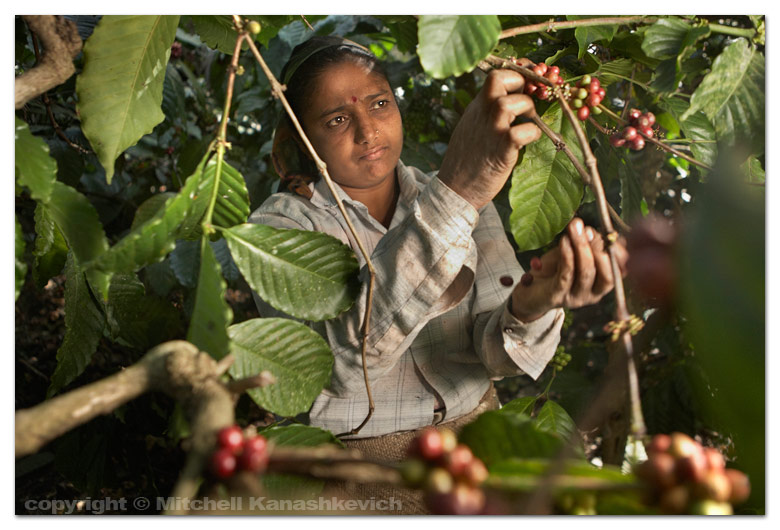
Fourth: Tea Plucker (as they are locall called) named Vindhu at work.
Fifth: Carrying the harvest on a foggy morning.
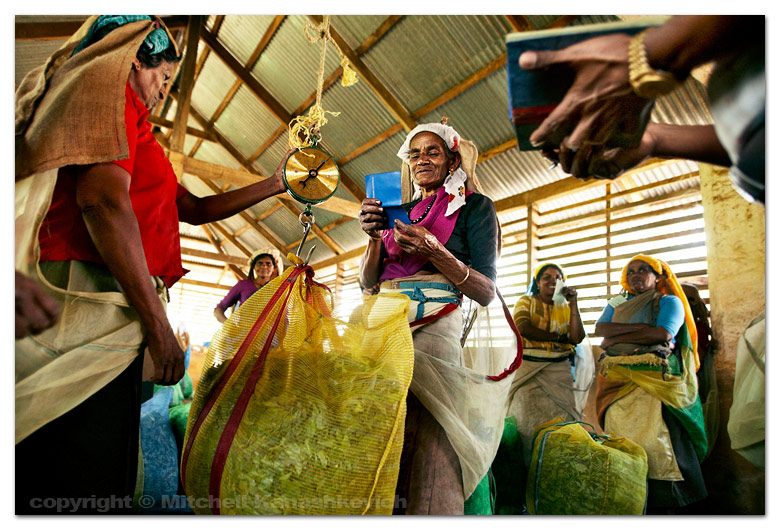
Sixth: Weighing the harvest at the store room.
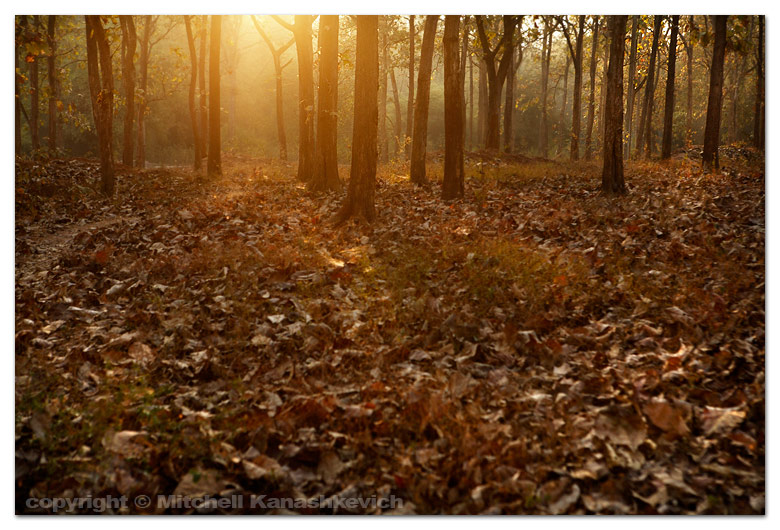
Seventh: Sun sets over the tea plantation.
From top to bottom:
First: A worker carrying a bag of tea from the store-room onto a tractor, which takes the day's harvest to a factory for the tea to be processed. Those bags weigh about 50kg each.
Second: A crowd gathers outside the Mysore palace. During the festival of Dussehra and every Sunday from 7-8pm the whole palace lights up with ninety-six thousand lightbulbs. Just after the photo was taken I joined the crowd.
Third: View of the workers from the bottom.
Fourth: Tea Plucker (as they are locall called) named Vindhu at work.
Fifth: Carrying the harvest on a foggy morning.
Sixth: Weighing the harvest at the store room.
Seventh: Sun sets over the tea plantation.



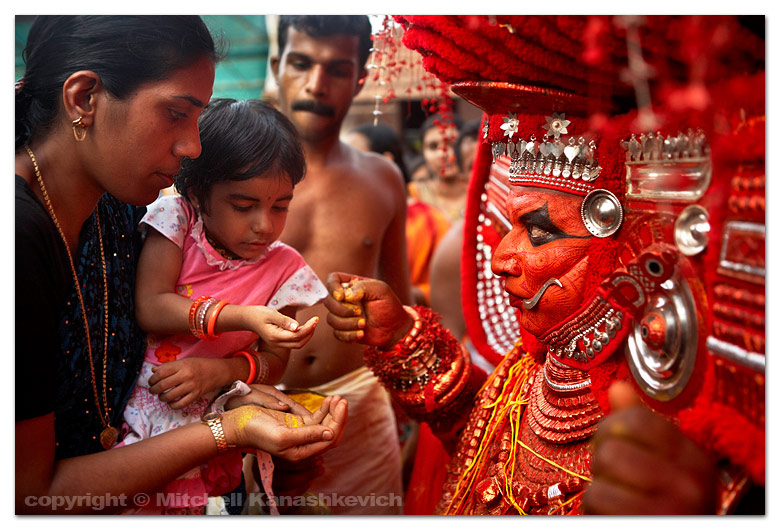 Photographing the Theyyam has been fascinating and frustrating. Fascinating because, well I think the images suggest why, and frustrating for several reasons. First there are crowds and then there are crowds of local photographers who battle for a good angle, not something I'm used to, since I rarely come across 'likeminded individuals' on my photographic quests. The next source of frustration comes from the fact that Theyyam is a deeply religious performance, in fact Theyyam means 'God' in the local language and so while the artist is performing he is basically a deity. When photographing such performances without much knowledge (learning on the spot from the fellow photographers who sometimes get reprimanded for pushing past anyone and anything) one has to tread carefully, not to offend anyone. Of course you could say that I could be better prepared and learn more about what I'm photographing, but not so. I have learned about the principal ideas and the history, however there are more than 400 Theyyam performances which are somewhat different from each other, not only that, the performances take place in different temples all the time and that means that the degree of restrictions is variable. On any given day I do not even know which Theyyam I'll be photographing.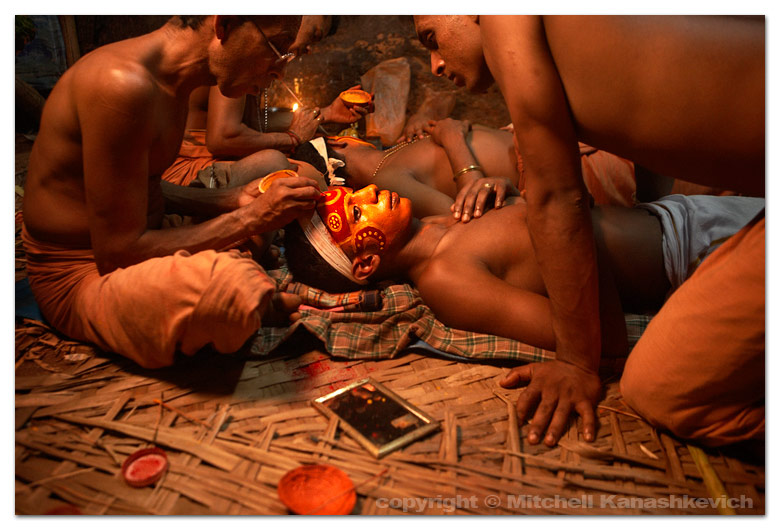
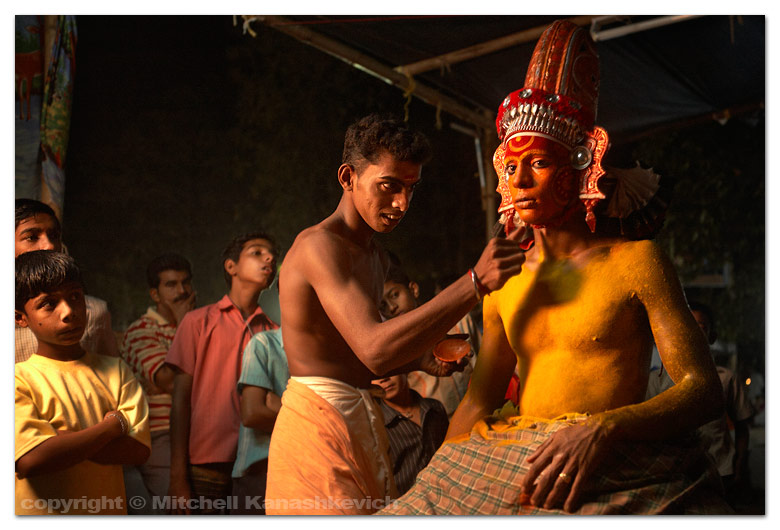 The first Theyyam the "Muhcilot" left me rather unimpressed, performance wise. In short it consisted of an elaborately dressed plump artist circling the temple and murmuring something in what I later found out to be a mixture of Sanskrit, Old Malayalam and Tamil (south Indian languages). Then the devotees rushed in, blessings were given and money started pouring in from all directions, so much money that it had to be put into baskets to be carried away. This went on for over two hours and as I later found out (I couldn't bear staying any longer) it would go into the night, until all of the devotees were blessed.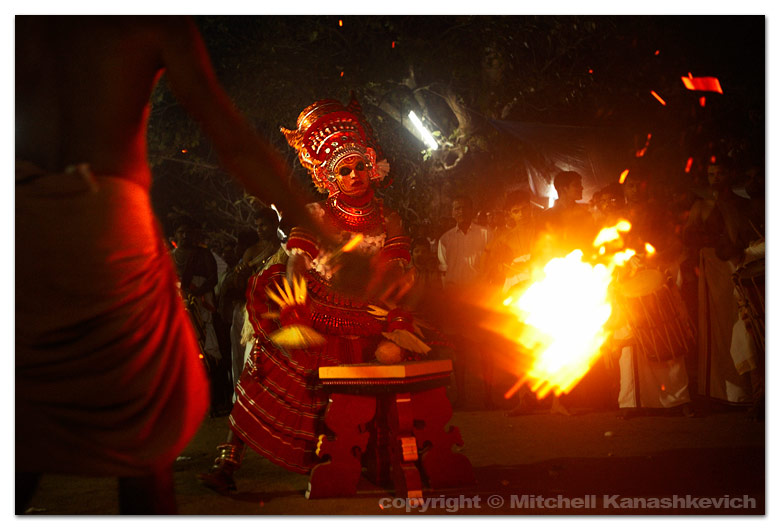
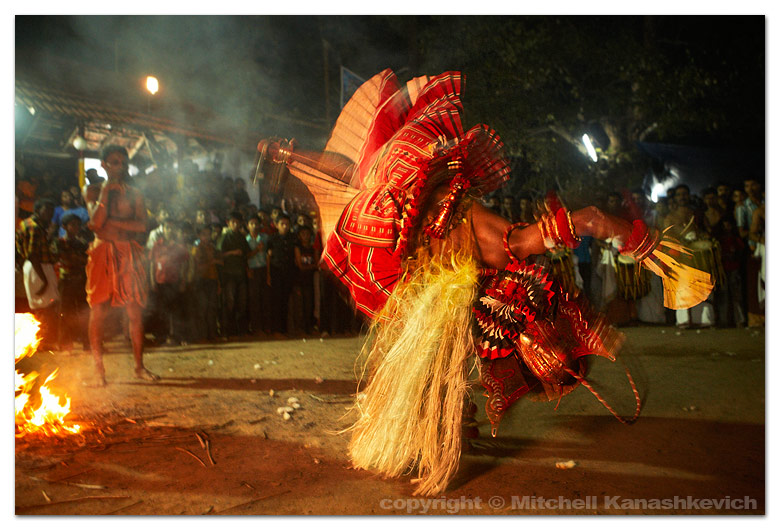 The second Theyyam was the same as the first and rather than watch it I decided to head to the Kerala Folklore Academy, to learn whether there was more to Theyyam than what I had seen. The photos on the walls of their small museum and a very brief conversation with a very-busy-overtime-working Theyyam expert left me with the belief that indeed there was much more to Theyyam. The very next night I would see just how much more. Upon arriving at another village temple I unknowingly befriended a young Theyyam artist who spoke basic English. When I found out who he was and who the small group of young men with him were (all Theyyam artists) I asked if I could photograph them while they put on their makeup and get dressed, they agreed. I photographed the whole process and then, suddenly the temple drummers began to beat a dramatic tune, the last elements of the costume were in place and the artist, as if possessed by a wild beast, jumped from his make up chair and rushed into the temple. His performance would be a stark contrast to the monotonous stuff I had seen earlier. There was fast, loud, dramatic drumming, fire, summersaults and cartwheels. The next Theyyam performance was even more impressive, with more of the same content, executed in an even more dramatic manner. The whole thing was pretty amazing, the atmosphere, the crowd's reaction and of course the Theyyam itself. Tanya and I definitely felt the magic in the air.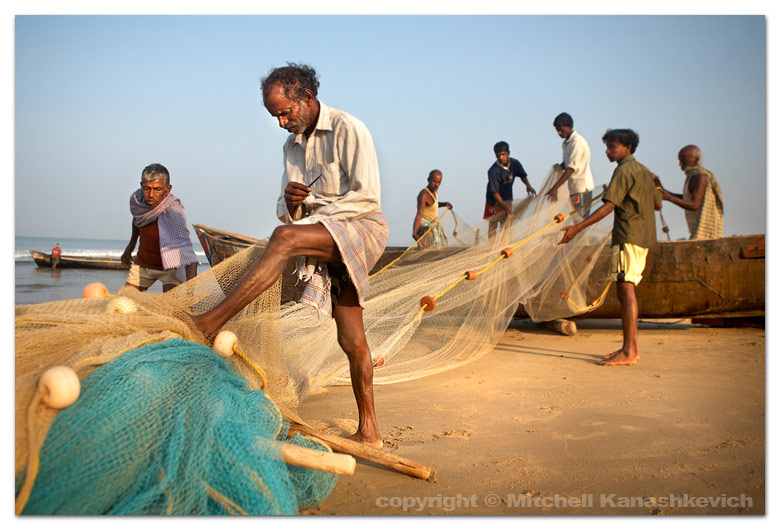




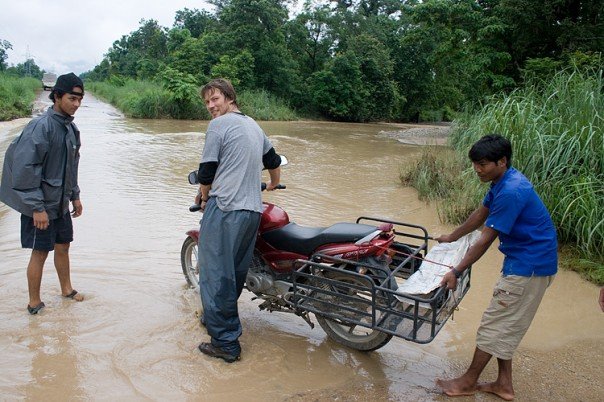
 The last ten or so days have been intense. We have covered over 1000km of road, sometimes extremely bad road, pot-holed, narrow and full of half-competent drivers. But riding on these kinds of roads often brings unexpected amusement. Close to the Madhya Pradesh/Rajasthan border we came across a 'holy man'. He had obviously been walking along the road for a long time, but he was being followed by an entourage - people with sun-blocking umbrellas and cars with large signs promoting his pilgrimage. Not so unusual for India, except for the fact that the man was completely naked.Less than one hundred kilometers later we were treated to a sighting of an almost literal clash of two worlds - the ancient and the modern. A caravan of bejeweled tribal women with camels and children (most of them on top of the camels) crossed the road as cars and trucks moving at insane speeds somehow managed to slow down in time not to run anyone over.
Our first stop was Ujjain - a place of pilgrimage that holds a great significance for Hindus around India. Every twelve years it hosts what is possibly the largest gathering of humans on earth - the Kubh Mela. The next mela is eight years away, so the city was rather subdued when we visited. Ujjain offers a glimpse of the exotic Hindu India that we often see on TV and in picture books. Every morning devotees bathe in the holy waters of the Shipra river, they wash away their sins and make offerings. The Brahmins (priests) at the riverside temples perform various religious ceremonies, the way their ancestors have for hundreds of years, the only difference now seems to be the priests' short attention span, evident from their constant checking of the mobile phone right in the middle of the ceremonies.
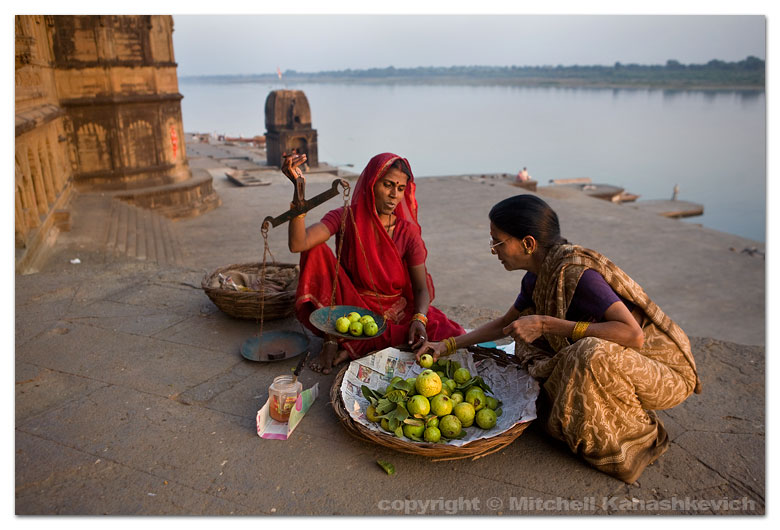
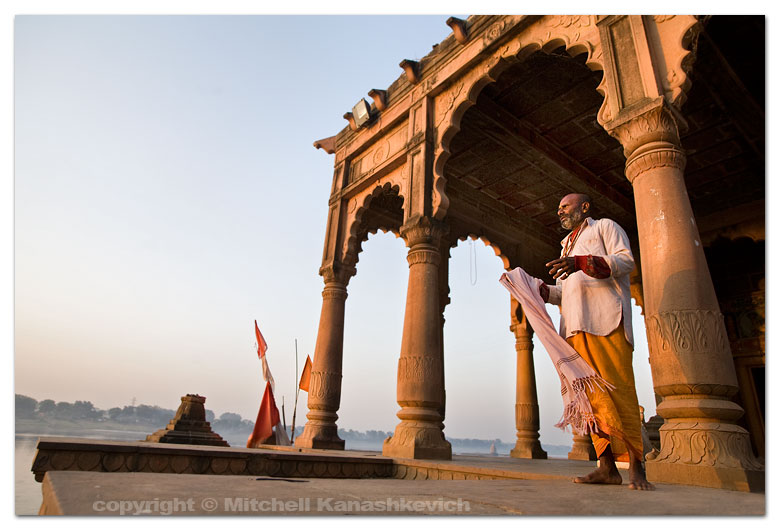
Our next stop at the small town of Maheshwar by the Narmada river, was meant to last for a day and a morning, but once we felt the peaceful rhythm of life here and the warmth of the locals, we got 'sucked' in and stayed three days. Maheshwar is also a place for religious pilgrimage, but it is much, much lower scale. It is what I imagine India was like a long time ago, before the whole modernization and population explosion occurred. There is definitely magic in the air, perhaps because it hasn't yet been killed by the blaring sounds from stereo systems and the large rubbish throwing crowds, so common around similar places. A walk along the riverside in Maheshwar is one of the most serene experiences one is likely to have in India and a swim in the Narmada river here at sunset is like nothing else (yes, I braved it and went in, but Narmada is not as polluted as India's other rivers). Floating in the water and seeing the huge fort and the numerous temples towering above, while the setting sun’s rays painted everything gold felt absolutely surreal.
We would have liked to stay longer in Maheshwar, but at this stage time is not a luxury we possess. Our stop at Nasik (another Kumbh Mela destination) was brief, but the next one at Pune was longer than expected. Not that I am complaining, since Pune turned out to be quite fascinating for a place where I didn't even think about photographing, but more of that in the next post.
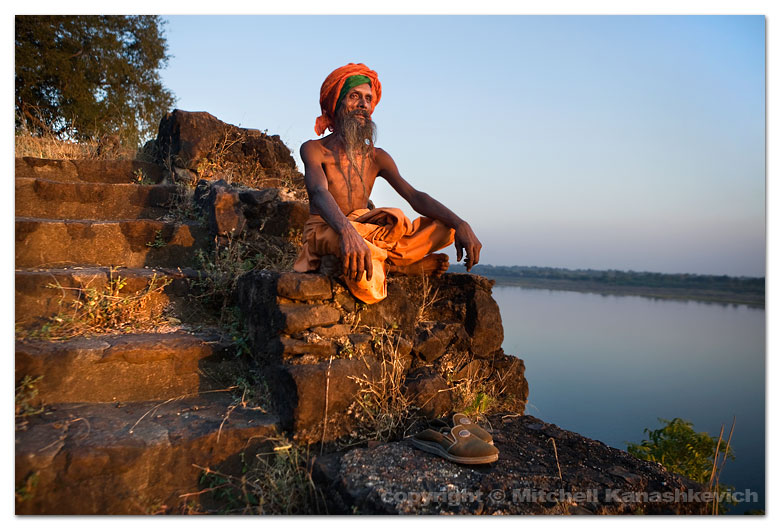
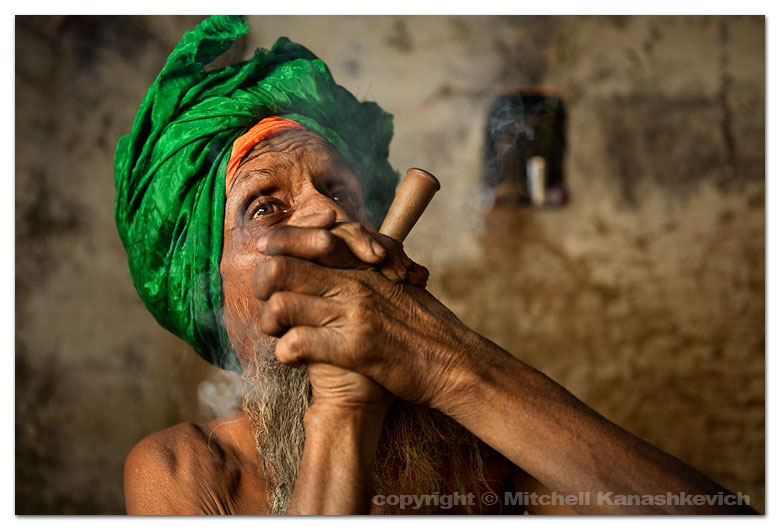
I am posting some images from Maheshwar. The first two (one at the top one below) are of a Sadhu we met at a small, isolated temple on a hill overlooking the Narmada. Sadhus are also known as holy men, ascetics and saints in India. In reality they are often very far from anything holy or spiritual. Most that I had come across were simply wanderers, beggars and in worst cases scam artists, in fact I am always cautious when a Sadhu asks me to come over and speak with him. Usually any conversation simply leads to how I should give him money, but there are also plenty of stories of naive travelers being drugged, robbed and having other not so nice things happen to them. If I am in famous pilgrimage places full of tourists I will not even waste my time, but here I was in Maheshwar (which only seems to get a trickle of visitors) and this Sadhu gestured with his hand from his temple for me and my wife to come up. While the isolated location seemed like an ideal place for something bad to happen we decided to go, we simply wouldn't drink or eat anything offered to us, paranoid maybe, but safe. The Sadhu spoke less English than I spoke Hindi and that is about 20 words. Our conversation revealed which pilgrimage places he had been to (very many). He had many children and whether they were biological or spiritual was not easy to understand, but they did live all over the world. Suddenly he got me to right down an address, which turned into a collection of random names and places in different countries. His children maybe? Finally I managed to communicate that I wanted to photograph him by the window of his room, he agreed, I asked if he could smoke his chillum (the pipe used to smoke opium) he did. There wasn't quite enough light in the room to photograph without setting the shutter speed too low, so again Tanya helped with the flash from the window side, used in a softbox at 1/64 of the power. The next image was taken outside of the Sadhu's temple. The sun was setting and the location seemed perfect, with the Narmada in the background. After the little photo session the Sadhu invited us to follow him somewhere, just for five minutes. We got a bit worried, as that's how those horror stories usually started, but again decided to take the risk. At this stage the Sadhu's nature seemed quite friendly, even if a little mad. We followed along a narrow path surrounded by vegetation and ended up at what seemed like another temple and a small room. There were houses with people nearby and one young man spoke some English. I asked him whether the Sadhu wanted us to come with him for some particular reason. – No, he just wanted to offer you food and milk, just ‘time pass’. It really didn’t seem like the Sadhu had too much to offer, so we politely declined and instead took down the address of his temple, to send him the photographs.
The last ten or so days have been intense. We have covered over 1000km of road, sometimes extremely bad road, pot-holed, narrow and full of half-competent drivers. But riding on these kinds of roads often brings unexpected amusement. Close to the Madhya Pradesh/Rajasthan border we came across a 'holy man'. He had obviously been walking along the road for a long time, but he was being followed by an entourage - people with sun-blocking umbrellas and cars with large signs promoting his pilgrimage. Not so unusual for India, except for the fact that the man was completely naked.Less than one hundred kilometers later we were treated to a sighting of an almost literal clash of two worlds - the ancient and the modern. A caravan of bejeweled tribal women with camels and children (most of them on top of the camels) crossed the road as cars and trucks moving at insane speeds somehow managed to slow down in time not to run anyone over.
Our first stop was Ujjain - a place of pilgrimage that holds a great significance for Hindus around India. Every twelve years it hosts what is possibly the largest gathering of humans on earth - the Kubh Mela. The next mela is eight years away, so the city was rather subdued when we visited. Ujjain offers a glimpse of the exotic Hindu India that we often see on TV and in picture books. Every morning devotees bathe in the holy waters of the Shipra river, they wash away their sins and make offerings. The Brahmins (priests) at the riverside temples perform various religious ceremonies, the way their ancestors have for hundreds of years, the only difference now seems to be the priests' short attention span, evident from their constant checking of the mobile phone right in the middle of the ceremonies.
Our next stop at the small town of Maheshwar by the Narmada river, was meant to last for a day and a morning, but once we felt the peaceful rhythm of life here and the warmth of the locals, we got 'sucked' in and stayed three days. Maheshwar is also a place for religious pilgrimage, but it is much, much lower scale. It is what I imagine India was like a long time ago, before the whole modernization and population explosion occurred. There is definitely magic in the air, perhaps because it hasn't yet been killed by the blaring sounds from stereo systems and the large rubbish throwing crowds, so common around similar places. A walk along the riverside in Maheshwar is one of the most serene experiences one is likely to have in India and a swim in the Narmada river here at sunset is like nothing else (yes, I braved it and went in, but Narmada is not as polluted as India's other rivers). Floating in the water and seeing the huge fort and the numerous temples towering above, while the setting sun’s rays painted everything gold felt absolutely surreal.
We would have liked to stay longer in Maheshwar, but at this stage time is not a luxury we possess. Our stop at Nasik (another Kumbh Mela destination) was brief, but the next one at Pune was longer than expected. Not that I am complaining, since Pune turned out to be quite fascinating for a place where I didn't even think about photographing, but more of that in the next post.
I am posting some images from Maheshwar. The first two (one at the top one below) are of a Sadhu we met at a small, isolated temple on a hill overlooking the Narmada. Sadhus are also known as holy men, ascetics and saints in India. In reality they are often very far from anything holy or spiritual. Most that I had come across were simply wanderers, beggars and in worst cases scam artists, in fact I am always cautious when a Sadhu asks me to come over and speak with him. Usually any conversation simply leads to how I should give him money, but there are also plenty of stories of naive travelers being drugged, robbed and having other not so nice things happen to them. If I am in famous pilgrimage places full of tourists I will not even waste my time, but here I was in Maheshwar (which only seems to get a trickle of visitors) and this Sadhu gestured with his hand from his temple for me and my wife to come up. While the isolated location seemed like an ideal place for something bad to happen we decided to go, we simply wouldn't drink or eat anything offered to us, paranoid maybe, but safe. The Sadhu spoke less English than I spoke Hindi and that is about 20 words. Our conversation revealed which pilgrimage places he had been to (very many). He had many children and whether they were biological or spiritual was not easy to understand, but they did live all over the world. Suddenly he got me to right down an address, which turned into a collection of random names and places in different countries. His children maybe? Finally I managed to communicate that I wanted to photograph him by the window of his room, he agreed, I asked if he could smoke his chillum (the pipe used to smoke opium) he did. There wasn't quite enough light in the room to photograph without setting the shutter speed too low, so again Tanya helped with the flash from the window side, used in a softbox at 1/64 of the power. The next image was taken outside of the Sadhu's temple. The sun was setting and the location seemed perfect, with the Narmada in the background. After the little photo session the Sadhu invited us to follow him somewhere, just for five minutes. We got a bit worried, as that's how those horror stories usually started, but again decided to take the risk. At this stage the Sadhu's nature seemed quite friendly, even if a little mad. We followed along a narrow path surrounded by vegetation and ended up at what seemed like another temple and a small room. There were houses with people nearby and one young man spoke some English. I asked him whether the Sadhu wanted us to come with him for some particular reason. – No, he just wanted to offer you food and milk, just ‘time pass’. It really didn’t seem like the Sadhu had too much to offer, so we politely declined and instead took down the address of his temple, to send him the photographs.

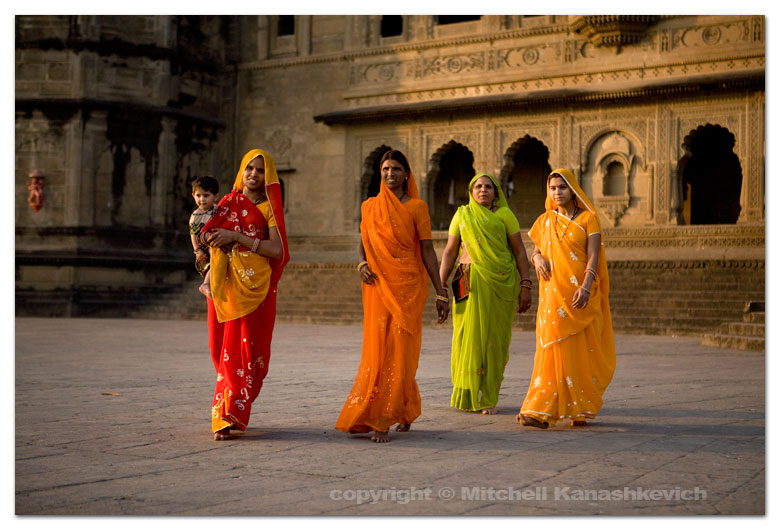


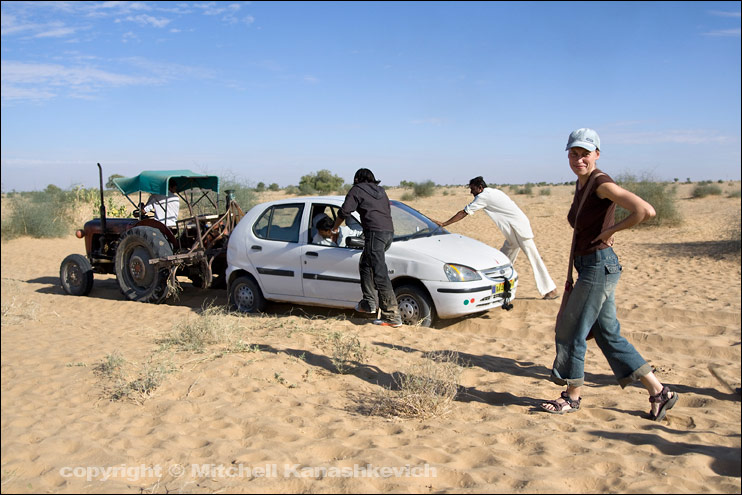
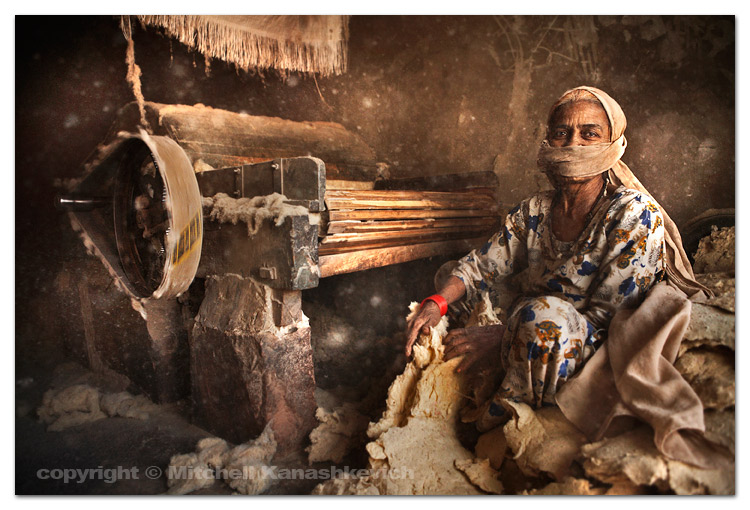

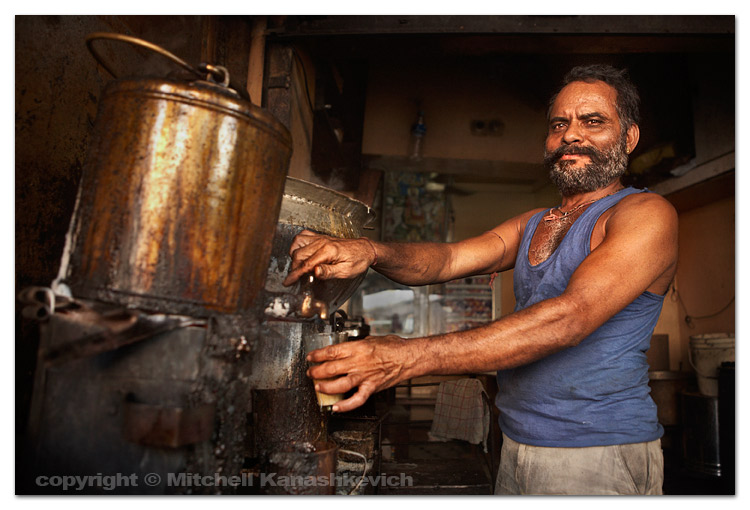
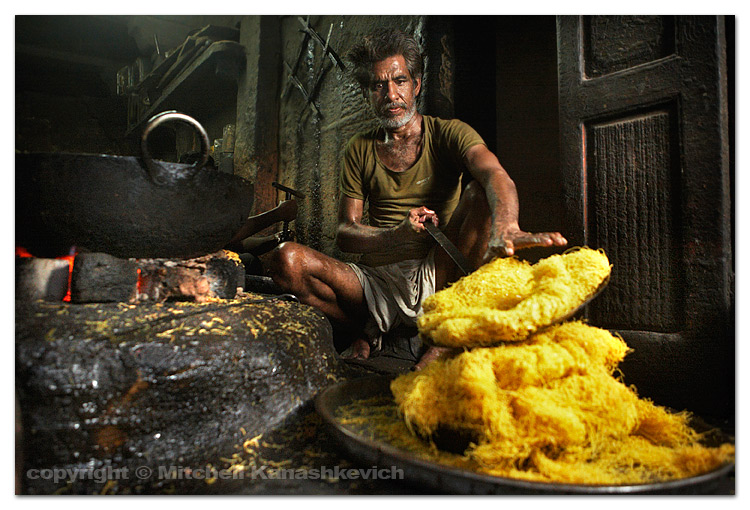

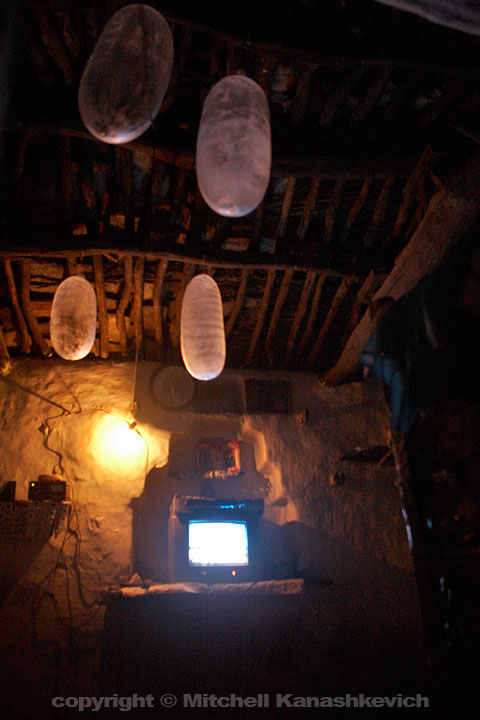
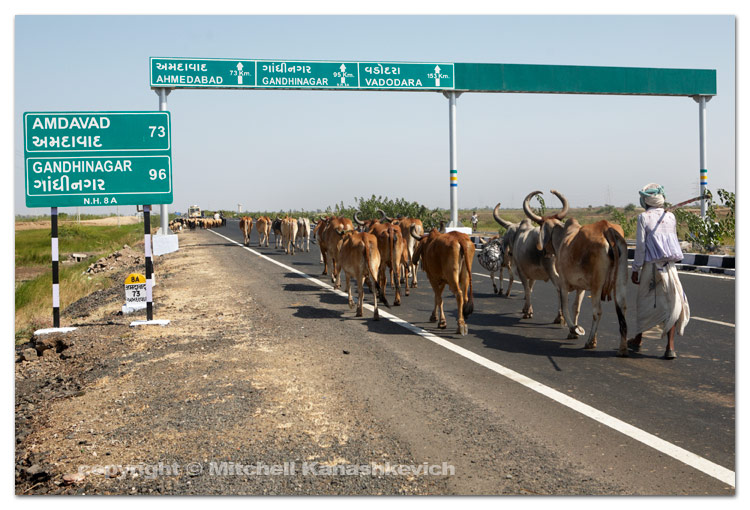 The ride to Ahmedabad was a reminder why I love this life on the road. Just me and my wife Tanya, riding through what are often beautiful, unfamiliar lands, experiencing everything together – this has been a large part of our lives over the last three years. In many ways it is as romantic as some may think, but there is another side, one which is not so nice.The beauty you see is sometimes matched by the horror (to me at least) - the amount of killed dogs on the roads is impossible to count, the scenery is not always ideal - ugly buildings and industrial, smoke belching areas really do not make for inspirational riding. And then there are the road users, who, well let’s just say they do not always act as one might expect, nor do the pedestrians – I’ve had much more close calls than I would have liked to, over the years. To top everything off there is the ‘pain in the butt factor’ (literally) – over a long journey a motorcycle seat becomes the least comfortable place in the world and even a roach-infested hotel starts to seem like a welcoming alternative.
Riding around India is not easy, but it is far from impossible and not as insane as many visitors to India may think. All that one needs is the knowledge of how the Indian roads work, once things begin to make sense everything starts to feel much less daunting.
The ride to Ahmedabad was a reminder why I love this life on the road. Just me and my wife Tanya, riding through what are often beautiful, unfamiliar lands, experiencing everything together – this has been a large part of our lives over the last three years. In many ways it is as romantic as some may think, but there is another side, one which is not so nice.The beauty you see is sometimes matched by the horror (to me at least) - the amount of killed dogs on the roads is impossible to count, the scenery is not always ideal - ugly buildings and industrial, smoke belching areas really do not make for inspirational riding. And then there are the road users, who, well let’s just say they do not always act as one might expect, nor do the pedestrians – I’ve had much more close calls than I would have liked to, over the years. To top everything off there is the ‘pain in the butt factor’ (literally) – over a long journey a motorcycle seat becomes the least comfortable place in the world and even a roach-infested hotel starts to seem like a welcoming alternative.
Riding around India is not easy, but it is far from impossible and not as insane as many visitors to India may think. All that one needs is the knowledge of how the Indian roads work, once things begin to make sense everything starts to feel much less daunting.